
Quick answer: The first 8 weeks of puppy training cover three core skills: toilet training (take the puppy out every 1 to 2 hours, reward on success, no punishment), crate training (introduce the crate as a positive space, never as punishment), and recall (start in a quiet room with high-value treats, build to a long line in the garden). The 8 to 16 week socialisation window is the single most important thing a new owner can do: 100 different people, 30 different surfaces, 20 different sounds, all in positive contexts.
The first 8 weeks framework
Most new owners focus on toilet training and forget the other two skills that matter just as much: crate training (which makes toilet training easier) and recall (which keeps the puppy safe for life).
A practical week-by-week:
- Week 1 to 2: establish the toilet spot, get the puppy used to the crate as a sleeping space, begin paw and ear handling.
- Week 3 to 4: introduce the lead indoors, start a 2-minute recall in a quiet room, expand the toilet area.
- Week 5 to 6: first outdoor walks post-vaccination, socialisation outings, recall in the garden.
- Week 7 to 8: reinforce recall, start "sit" and "wait" cues, expand socialisation.
Toilet training
A puppy under 12 weeks cannot hold a full bladder. Take them out:
- First thing in the morning.
- Last thing at night.
- Within 15 minutes of every meal.
- After every nap.
- After every play session.
- Every 1 to 2 hours during the day.
Use a consistent cue word ("busy", "toilet", "potty"). Reward on success with a treat and calm praise. Do not punish accidents indoors: clean with an enzymatic cleaner (not bleach, which does not break down the smell) and watch for the next time.
Most puppies are reliably clean by 4 to 6 months.
Crate training
A crate is the most useful training tool for a new owner. Dogs are den animals and will not soil where they sleep if the crate is the right size.
- Size: the puppy can stand, turn around, and lie down. A divider panel lets you resize as the puppy grows.
- Introduction: treats in the crate, soft bedding, the door open. Feed meals inside. Never use the crate as punishment.
- Length of stay: a puppy under 6 months should not be crated for more than 3 to 4 hours at a stretch. Plan around your work schedule.
A puppy who sees the crate as a positive space settles faster at night, travels better in the car, and is easier to manage at the vet.
Recall
Recall is the safety skill that matters most. A dog who comes back when called can be off-lead in safe areas for life.
- Start indoors. A quiet room, no distractions. Say the puppy's name + "come" + reward with a high-value treat.
- Build to a long line in the garden. 5 to 10 metres, then 20, then the full length of the line.
- Never call the puppy to punish. Recall must always be a positive event.
- Use a jackpot reward occasionally (3 to 5 treats in a row, not just one) for a really fast recall.
By 6 months, a well-trained puppy should come when called at least 80% of the time in the garden.
Lead walking
A puppy should be introduced to a lead between 8 and 10 weeks. Start indoors with a harness (less pressure on the neck) and a 1.2 to 1.5 metre lead. Do not use a retractable lead for puppies: the constant slack teaches the puppy to pull.
- Inside first. Walk around the kitchen or living room. Reward for walking with you on a loose lead.
- Then the garden. Real distractions (sounds, smells).
- Then the street post-vaccination. New sights, sounds, and smells.
Most puppies pull on the lead for the first 6 months. Pulling is not disobedience: it is the natural pace. Reward the moments when the lead is loose, and the loose-lead behaviour grows.
The 8-16 week socialisation window
The single most important thing a new owner can do. The window does not return. After 16 weeks, the puppy's brain is more set in its ways; new experiences take longer to be accepted.
A practical socialisation protocol (the "100 people in 100 days" approach):
- People: 100 different people. Men, women, children of all ages, people in hats, people in uniforms, people with beards, people of different ethnicities. Each encounter is a quick "say hello, give a treat, move on".
- Surfaces: grass, concrete, gravel, sand, wood, metal grates, slippery floors. Each new surface builds confidence.
- Sounds: traffic, vacuum, hairdryer, fireworks recording (low volume at first), thunder, doorbell. A sound desensitisation app (like the Dogs Trust "Sound Proof Puppy" app) is useful.
- Animals: vaccinated, friendly adult dogs. Other species where safe.
- Transport: car, bus, train. Post-vaccination only on public transport.
A puppy who has had 100 people, 30 surfaces, and 20 sounds by 16 weeks is dramatically less likely to develop fear aggression or noise phobia as an adult.
When to hire a trainer
Most UK owners can handle the first 8 weeks at home with online resources and the RSPCA / Dogs Trust guides. A trainer is worth the money in three situations:
- A puppy with severe anxiety or fear aggression (hiding, growling, snapping).
- An owner who is overwhelmed (returning to work, single parent, multiple pets).
- Specific behaviour problems (resource guarding, separation distress, leash reactivity that does not respond to positive reinforcement).
Look for a force-free trainer accredited by the IMDT (Institute of Modern Dog Trainers) or APDT (Association of Pet Dog Trainers). Avoid trainers who use prong collars, shock collars, or dominance-based methods.
FAQ
Frequently Asked Questions
How long does it take to toilet train a puppy?
Most puppies are reliably clean by 4 to 6 months. The first 2 weeks are the hardest (accidents every day, night-time trips). By 12 weeks, most puppies signal at the door. By 6 months, the accidents stop. Take the puppy out every 1 to 2 hours during the day and within 15 minutes of every meal.
When can a puppy go outside UK?
1 to 2 weeks after the second vaccination, around 11 to 12 weeks. Before then, carry the puppy in public or use a private garden. Invite vaccinated, friendly dogs to your home or garden for socialisation in the meantime.
What is the puppy socialisation window?
8 to 16 weeks. The window does not return. During this window, the puppy's brain is most receptive to new experiences. A puppy who has had 100 different people, 30 different surfaces, and 20 different sounds by 16 weeks is dramatically less likely to develop fear aggression or noise phobia as an adult.
Should I use a harness or a collar for puppy training?
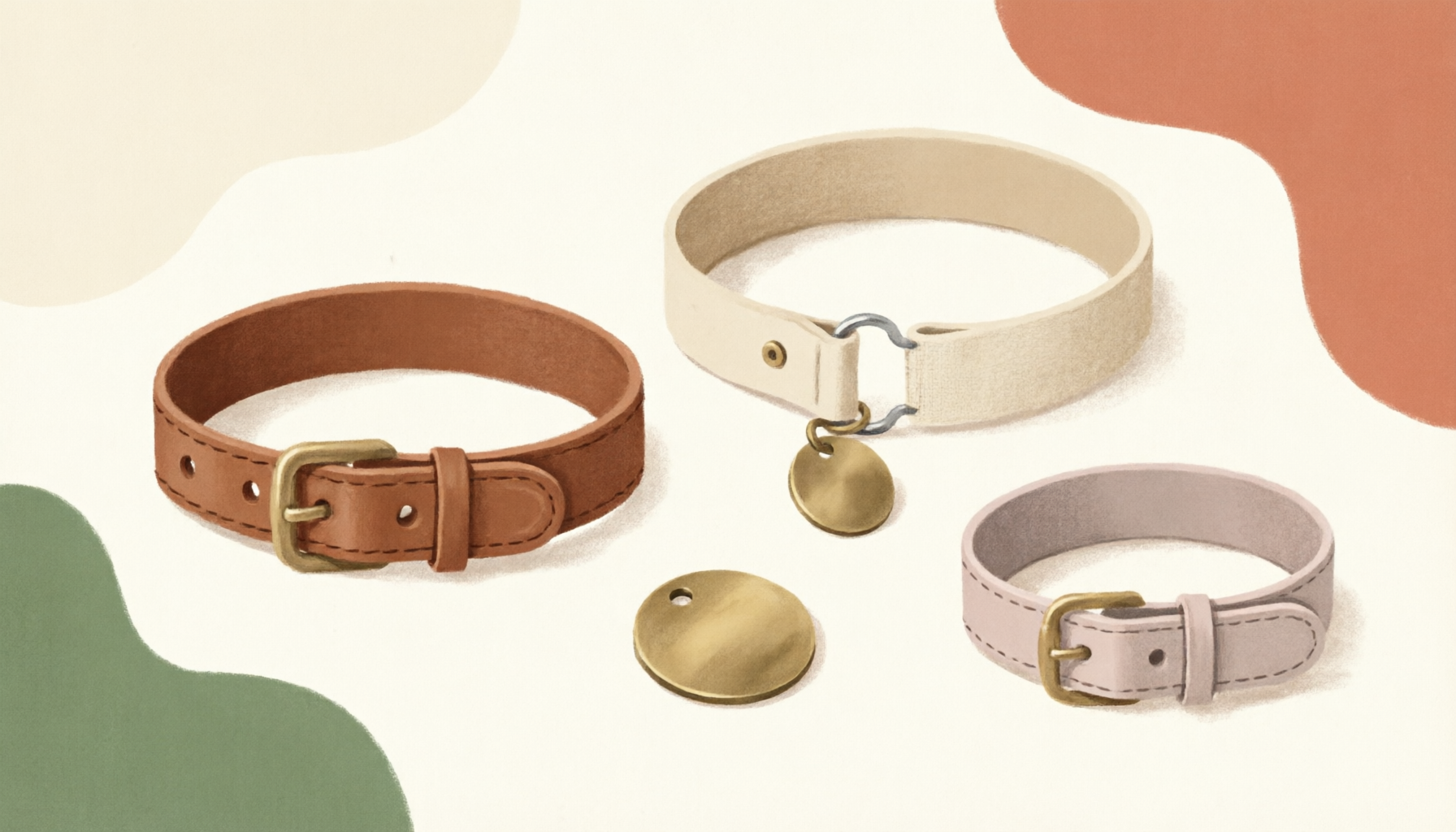
A harness is gentler on a young puppy's neck and is the right choice for the first 3 to 6 months. A flat-buckle collar is fine for ID-tag purposes. See our [puppy collar vs harness guide](/blog/puppy-collar-vs-harness-what-to-use-and-when) for the full comparison.
Picking a first collar or harness? See our collars guide and puppy collar vs harness. Need a bed for crate training? See our beds guide.
Puppy care guide UK Bringing a puppy home UK How to stop a dog pulling Puppy grooming UK Collars guide Complete dog grooming guide