
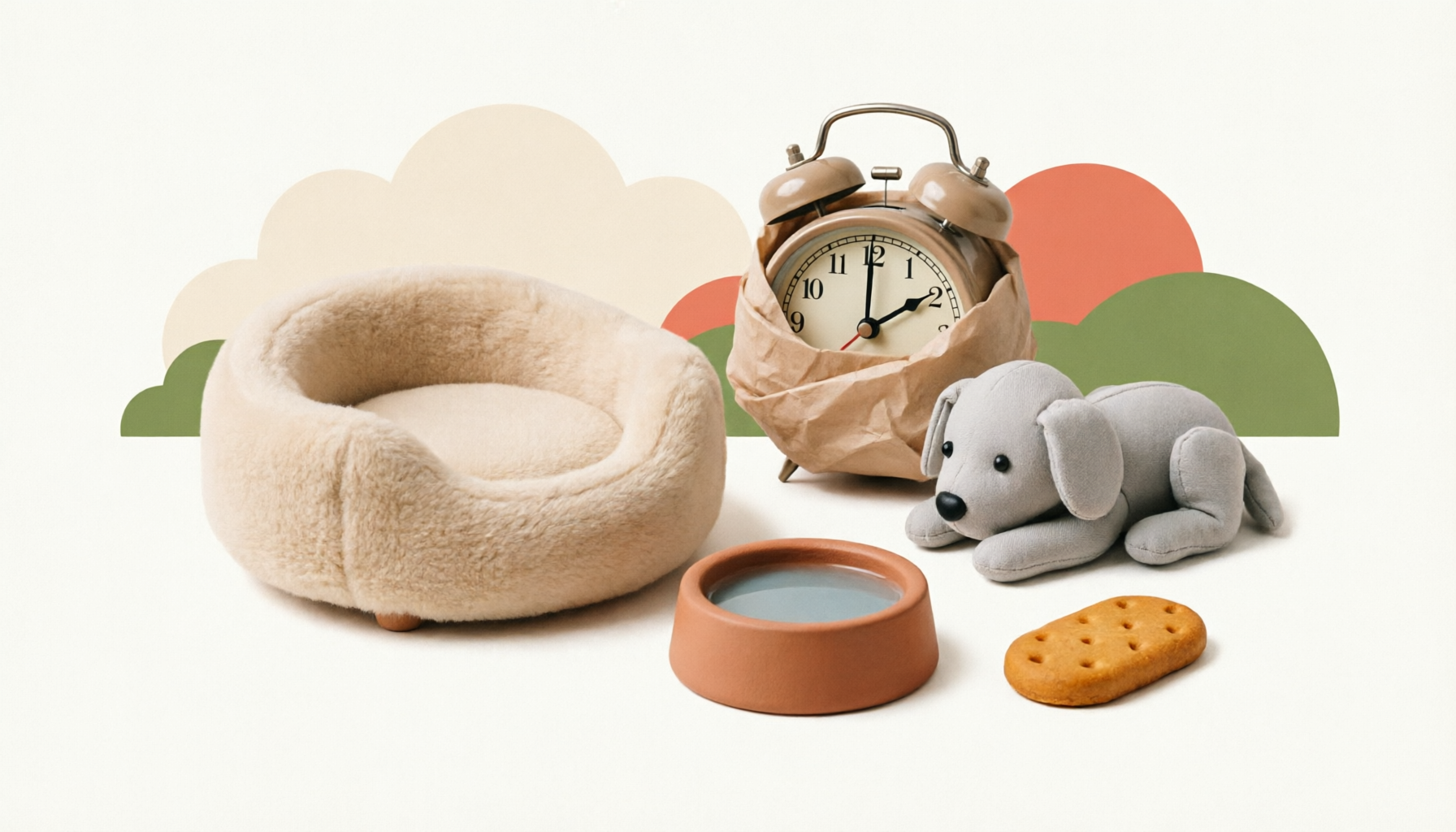
Quick answer: The comfort kit basics: a crate or bed, familiar-smelling blanket from the breeder, warm bedding, treats for positive association. Leave the lavender spray and ticking clock at home.
The First Night Checklist — 10 Items That Actually Help
- Crate or bed — somewhere safe and enclosed
- Blanket from the litter/breeder — familiar scent reduces anxiety more than any product
- Treats for positive reinforcement — reward settling calmly, not whining
- Familiar toy from breeder — a piece of the old life
- Treat pouch for the owner — quick reinforcement when puppy settles well
- Water bowl nearby — puppies get thirsty at night
- Warm fleece or blanket layer — body heat retained, not gadgets
- Treats for toilet training — reward successful outdoor trips
- Vet contact number saved — just in case
- Patience — the single most important item
What NOT to Pack
Lavender or chamomile sprays: No proven effect, and some puppies are sensitive to essential oils. Leave them at home.
Hot water bottles: Risk of burning, leaking, dependency. A blanket from the breeder is safer and more effective.
Ticking clocks: This is an old remedy with no scientific evidence. The blanket from the breeder is more effective.
Anti-anxiety medication without vet guidance: Never medicate a puppy without professional input.
The First Night Routine
The Afternoon Before
Set up the crate with familiar-smelling bedding. Introduce the puppy to the crate with treats and play. Keep the crate door open — the crate should be a positive space, not a cage.
Bringing Puppy Home
Bring the puppy home in the late afternoon or early evening. Show the water bowl, the treats, the crate. Let the puppy explore at their own pace.
Bedtime
Bed at the owner's bedside for the first week. Take the puppy outside for a toilet break before settling. Reward calm settling with treats. Ignore whining — rewarding it reinforces waking.
Overnight
Expect broken sleep. Toilet trips every 2–3 hours for young puppies. Keep the room dark and quiet. Treat after successful toilet trips, not for whining.
Morning
First praise for sleeping through (if it happens). Take outside immediately, reward heavily. Start the crate-is-good routine: treats whenever the crate is approached or the door is opened.
FAQs
Should I sleep on the floor next to the crate?
Owners who sleep next to the crate report calmer puppies. This is practical for the first week. Break it gently once the puppy settles — don't make it a permanent arrangement.
Does a blanket from the breeder really matter?
Yes — the blanket the puppy has slept with carries the familiar scent of the litter and mother. This is the single most evidence-based anxiety-reducing intervention for puppies in a new home.
What temperature should the room be?
18–20°C is comfortable for most puppies. Cooler rooms need more bedding. Warmer rooms (above 22°C) risk overheating. A fleece blanket provides warmth without gadgets.
My puppy won't settle — what do I do?
Ignore the whining (it will pass), ensure the blanket is familiar, check the room temperature, and make sure the crate is a positive space. If persistent anxiety continues past the first week, consult your vet or a qualified behaviourist.
Visa&Momo's puppy accessories → — comfort items for puppies, blankets and bedding.
Puppy Bedroom Ideas New Puppy Gifts Starter Guide Dog Gifts UK