
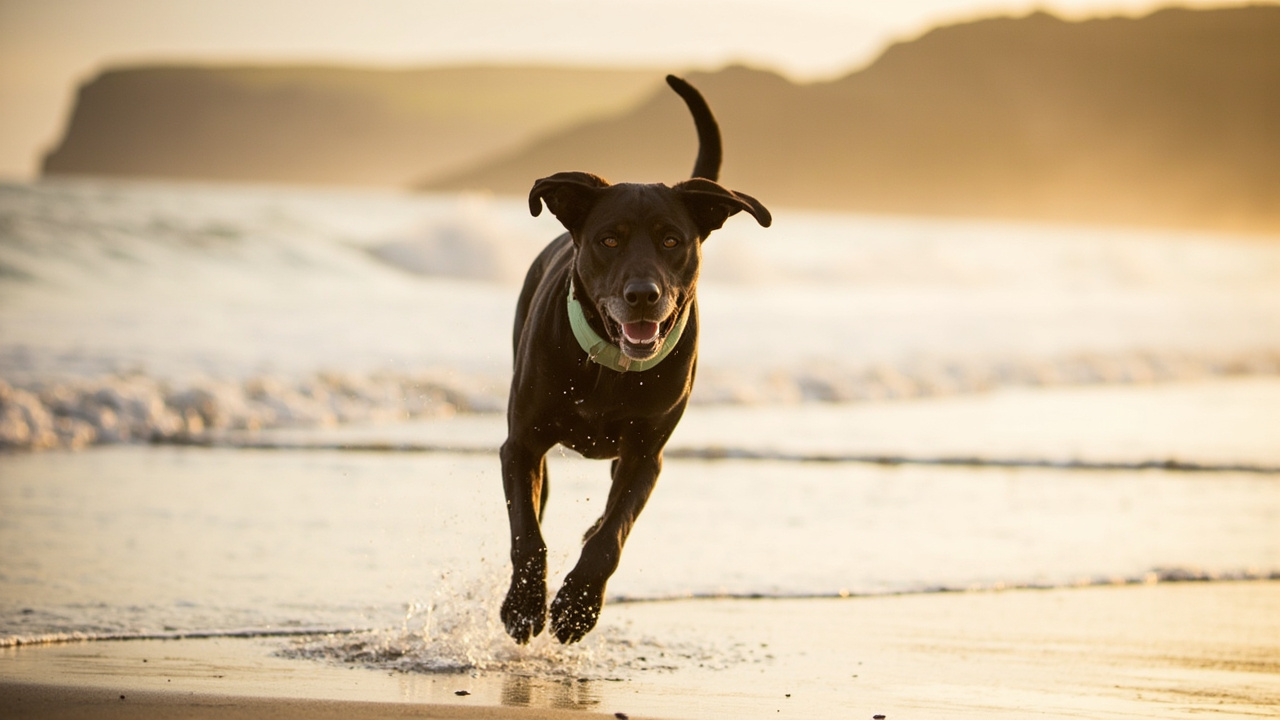
Quick answer: The UK has more genuinely dog-friendly beaches than anywhere in northern Europe. Cornwall, Devon, Pembrokeshire, the Yorkshire coast, Norfolk, and large parts of Scotland offer year-round dog access. Most other beaches enforce a 1 May – 30 September dog ban under the Public Spaces Protection Order (PSPO) rules, so check the sign at the entrance or the postcode on the Blue Cross dog beach finder before you set off. Pack a long line for off-lead recall, a fresh-water flask (salt water is harmful to drink), and a microfibre dog coat for after-swim rinsing.
What "Dog Friendly" Actually Means at the Car Park Gate
Three different rules apply to UK beaches, and they do not always match what the sign at the entrance says:
- PSPO seasonal ban (most English and Welsh beaches). Dogs banned 1 May to 30 September, allowed off-lead October to April. Fines are typically £80–£100. We have watched two separate councils hand out fines on the Cornwall-Devon border, and the experience is a quick way to ruin a weekend.
- Year-round ban. A handful of beaches have year-round dog bans for nesting bird or seal conservation (some Northumberland and Norfolk beaches fall in this category).
- Year-round dog friendly. The beach has no PSPO at all. Dogs are welcome off-lead all year, often with a courtesy "dogs on lead near wildlife" ask.
The list below favours year-round and off-season (October–April) beaches. Peak-season (May–September) beaches with seasonal bans are flagged so you do not drive two hours to find a closed gate.
South West England — Cornwall, Devon, Dorset
The South West is the heart of UK dog-beach culture. Mild winters, sheltered coves and a long-standing dog-walking tradition mean many beaches here are year-round dog-friendly.
Cornwall (year-round):
- Porthkidney Sands (Lelant) — three miles of golden sand at the mouth of the Hayle estuary, dog-friendly all year, dog-friendly cafe on site.
- Harlyn Bay (Padstow) — sheltered cove, year-round access, gentle surf, popular with surfers and dogs alike.
- Sennen Cove (Land's End) — wide white sand, year-round dog access, the Sennen Cove Cafe welcomes muddy paws.
- Praa Sands (between Penzance and Helston) — long flat beach, year-round access, low cliffs, plenty of space for off-lead ball games.
- Bossiney Cove (Tintagel) — tucked-away cove, year-round, accessed via the cliff path from Tintagel. Beautiful in winter.
Devon (year-round):
- Woolacombe Beach — three miles of sand on the North Devon coast, year-round dog access, dog-friendly parking.
- Saunton Sands (Braunton) — five miles of sand behind the Braunton Burrows dune system, year-round access, dogs allowed off-lead.
- Bigbury-on-Sea — wide sandy beach, year-round dog access, with Burgh Island visible just offshore.
- Blackpool Sands (Dartmouth) — shingle beach in a sheltered bay, year-round access, dogs welcome in the Venus Cafe.
- Beer Beach (Devon) — pebbly cove with dogs allowed year-round, traditional fishing village atmosphere.
Dorset (mostly off-season):
- West Bay (Bridport) — east beach year-round dog-friendly; west beach has seasonal ban.
- Charmouth Beach — fossil-hunting beach, year-round dog access, gentle shelving sand.
Wales — Pembrokeshire, the Gower, Anglesey
Wales is quietly one of the best dog-beach regions in Europe. The Pembrokeshire Coast National Park alone has over 200 miles of coastal path with year-round dog access on most of its beaches.
Pembrokeshire (year-round):
- Freshwater West — wide surfing beach used in the Harry Potter films, year-round dog access, dog-friendly car park.
- Barafundle Bay — National Trust beach, often voted one of the UK's best, year-round dog access via a short cliff walk from Stackpole.
- Whitesands Bay (St Davids) — wide blue-flag beach, year-round dog access, popular with surfers.
- Newgale Beach — two miles of pebble-and-sand beach, year-round access.
Gower Peninsula (year-round):
- Rhossili Bay — three miles of sand, often voted the UK's best beach, year-round dog access, dogs welcome in the Worms Head Hotel.
- Three Cliffs Bay — year-round dog access, beautiful classic dunes, accessed via a short walk from Penmaen.
Anglesey:
- Traeth Lligwy — sheltered cove, year-round dog access, dog-friendly cafe.
- Red Wharf Bay — wide sandy bay, year-round access, popular for families and dogs.
North and East England — Yorkshire, Northumberland, Norfolk
The North and East coast beaches tend to be cooler and more exposed, but they are quieter and have stronger year-round dog access.
Yorkshire (mostly off-season — seasonal bans on the main beaches):
- Runswick Bay — sheltered sandy bay, off-season access, one of the most dog-friendly Yorkshire beaches.
- Staithes Beach — cobbled beach, off-season access, traditional fishing village, dramatic cliffs.
- Robin Hood's Bay — dog-friendly off-season (1 Oct – 30 Apr), dogs banned in summer for the narrow streets.
Northumberland (year-round on most beaches):
- Bamburgh Beach — wide sandy beach below Bamburgh Castle, year-round dog access, one of the UK's most photographed.
- Embleton Bay — long sandy beach north of Dunstanburgh Castle, year-round access.
- Seahouses to Beadnell — long stretch of dog-friendly sand, year-round.
Norfolk (mostly off-season — strict PSPO rules):
- Holkham Beach — one of the most beautiful beaches in the UK, off-season access (1 Oct – 30 Apr). The pinewoods back onto the beach for shelter. Summer ban to protect nesting birds.
- Brancaster Beach — wide tidal flat, off-season dog access, dog-friendly pub (The White Horse) right on the beach.
Scotland — The Outer Hebrides, Highlands, East Coast
Scotland is the most dog-friendly coastal region in the UK by area. Most beaches are year-round dog-friendly with very few PSPO restrictions.
Outer Hebrides (year-round):
- Luskentyre Beach (Isle of Harris) — often called the UK's most beautiful beach, year-round dog access, white sand and turquoise water.
- Traigh Mhor (Isle of Lewis) — wide sandy machair beach, year-round dog access.
Highlands (year-round):
- Achmelvich Beach (Assynt) — white sand and turquoise water, year-round dog access, often voted Scotland's best.
- Camusdarach Beach (Arisaig) — silver sand beach, year-round dog access.
East coast (year-round):
- Yellowcraig Beach (North Berwick) — sandy beach with views of the Bass Rock, year-round dog access, dog-friendly cafe.
Dog-Beach Etiquette — The Six Rules Every Owner Follows
- Pick up. Always. Bin it or bag it. Most UK beaches have dog-waste bins at the car park; carry a spare bag for the walk back.
- Keep off the dunes in nesting season (April–August). Ground-nesting birds (ringed plover, oystercatcher, terns) nest directly on the sand. Stay on the wet sand and keep your dog close.
- Watch for seals. Keep your dog on lead if you see a seal on the beach or in the water. Seals can be aggressive on land, and your dog can disturb pups.
- Long line for off-lead. UK coastal paths and beaches often have no fence. A 10m long line gives your dog freedom while you keep recall. This is the single most useful piece of kit for a coastal dog walk.
- Fresh water. Bring a flask of fresh water and a foldable bowl. Dogs drinking salt water vomit, dehydrate and can get salt poisoning.
Coastal-Day Packing List
- [ ] Long line (10m recommended)
- [ ] Fresh water flask + foldable bowl
- [ ] Microfibre dog coat (for after-swim rinsing and warmth in winter)
- [ ] Towel — old bath towel for the car boot
- [ ] Poop bags (3 per dog, minimum)
- [ ] Lead (even if you plan to use the long line)
- [ ] Collar with up-to-date ID tag — required by law under the Control of Dogs Order 1992. A Visa&Momo personalised collar with your mobile number engraved is the safest option for a beach walk.
- [ ] First-aid basics: saline wash, tick remover, paw wax for hot sand
Frequently Asked Questions
Which UK beaches are dog friendly all year?
Cornwall, Devon, Pembrokeshire (Wales), the Gower, Anglesey, Northumberland, the Outer Hebrides, the Scottish Highlands and the Yorkshire coast have the strongest year-round dog access. Use the postcode checker on the Blue Cross dog beach finder (bluecross.org.uk/dog-friendly-beaches) to confirm before you travel — local PSPO rules change every year.
Are dogs allowed on UK beaches in summer?
On most English and Welsh beaches, dogs are banned between 1 May and 30 September under PSPO rules. Fines are typically £80–£100. Scotland, Northumberland, much of Wales, and most Cornish and Devon beaches have no seasonal ban. Always check the sign at the entrance or the local council website before you let your dog off-lead in peak season.
Can I take my dog swimming in the sea?
Yes — most UK beaches allow dogs to swim. Rinse your dog with fresh water after every swim (salt water irritates skin and coat), don't let them drink sea water (vomiting and salt-poisoning risk), and watch for strong currents and rip tides. The RNLI lifeguard flags apply to dogs as well as humans — if the red flag is up, don't go in.
What is the best UK beach for dogs with cliff walks?
The Pembrokeshire Coast Path, the South West Coast Path, and the Cleveland Way (Yorkshire) all offer cliff-top walks with year-round dog-friendly beaches below. For a single-beach day, Barafundle Bay (Pembrokeshire), Rhossili Bay (Gower), and Luskentyre (Harris) are the three most-photographed — all year-round dog access with dramatic scenery.
Are dogs allowed on the beach at Whitby, Scarborough or Robin Hood's Bay?
Scarborough North Bay and Whitby West Cliff allow dogs off-season only (1 Oct – 30 Apr). Robin Hood's Bay is dog-friendly off-season but the village streets are too narrow for dogs in summer. The dog-friendly Yorkshire alternatives are Runswick Bay, Staithes, and Sandsend — all year-round or off-season access.
Do I need a special collar for the beach?
A waterproof fabric or biothane collar is the best option for beach walks — quick-drying, doesn't hold salt, and easy to rinse. Visa&Momo's handmade fabric collars in the Cosy Garden palette are made specifically for active UK dogs, with a brass ID tag that won't rust in salt water.