
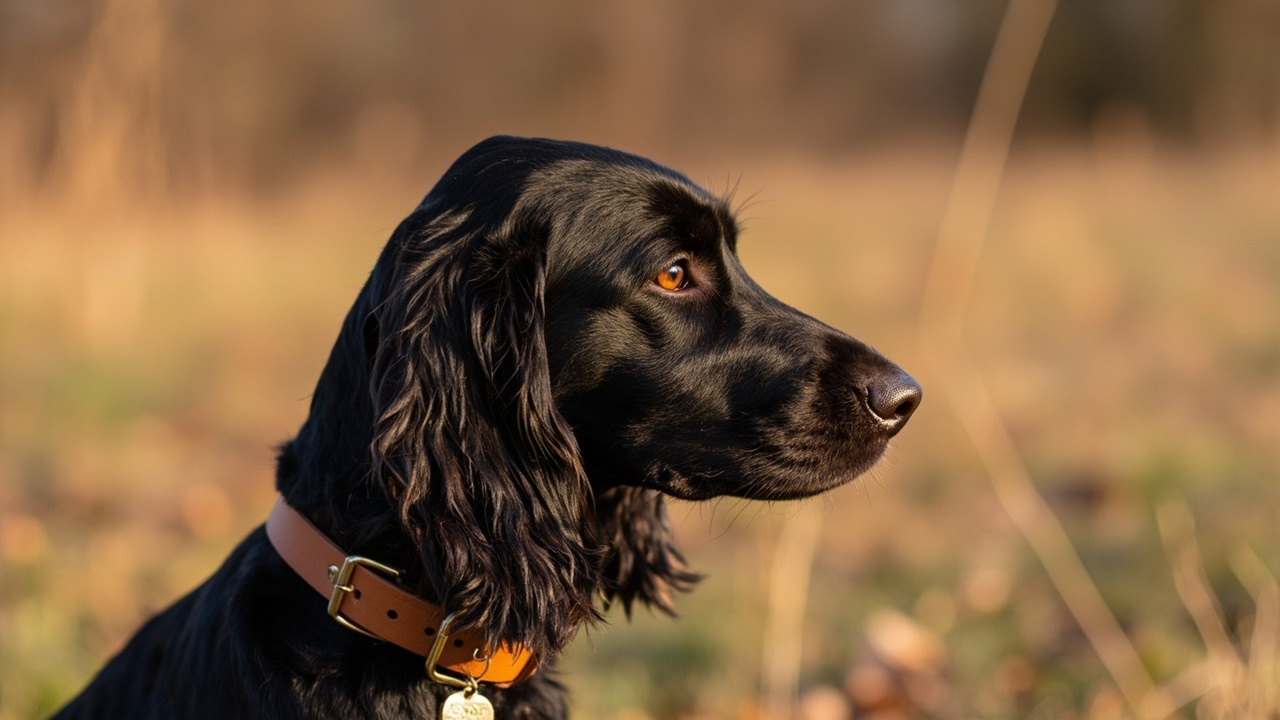
Quick answer: Cocker Spaniels are medium-sized gundogs (typically 12–15 kg, 30–45 cm neck) with long, silky ear feathers and a coat that mats under bulky collars. Choose a slim 15–20 mm collar in smooth leather or coated webbing, sized so two fingers fit underneath, and check the neck coat weekly for tangles. For walk-time on a strong-pulling Cocker, pair the collar with a front-clip harness.
Why Cocker ears change the collar equation
Cocker Spaniels sit comfortably in the top five Kennel Club registrations year after year. Their soft expression and silky coat make them a default family gundog, and they're well loved for it. What gets missed in the breed profile is how much those long, low-set ears change a collar decision.
The ear feathers (the long, fine hair on the underside of the ear) mat easily when a bulky or wide collar presses them flat against the neck, trapping warmth and damp against the skin. Cockers are already prone to otitis externa (outer ear infection) and trapped moisture under a thick collar is one of the easier ways to make that worse.
A working Cocker might weigh only 14 kg but carry a 35 cm neck — the chest muscling from a season in the field pushes the measurement up. The opposite is true for show Cockers kept lean: smaller body, slightly slimmer neck. Measure the dog in front of you, not the breed average on a chart.
Then there's the working drive. Working Cockers have a high prey drive and pull hard the moment they catch a scent. A flat collar puts pressure on the throat at exactly the wrong moment, and a strong Cocker can slip a loose flat collar in seconds when lunging downward into brambles. That's a fit problem, not a behaviour problem, and a good collar setup makes a real difference.
The ear-feather test (try this at home)
Before you commit to a collar width, run one quick check. Fasten the collar at the correct two-finger-fit tightness, then look at how it sits against the ear set.
If the collar rides high enough that the ear flap can fold down behind it without bunching, you've got a width that suits the breed. If the ear has to lie flat on top of the collar to fit, the collar is too wide. We've fitted a few dozen working Cockers over the years and the pattern is consistent: wider than 20 mm and the ear feathers start to compress.
A second check worth doing. After a wet walk, lift the ear and look at the skin where the collar sits. Any pinkness, any damp patch that doesn't dry, any tangles that have formed behind the ear in a single walk — those are early signs the collar is wrong for the dog, not signs you need to groom more.
A small bit of breed-specific honesty: the supermarket puppy collar is fine for the first three months. By month four, most Cockers have outgrown both the width and the weight of those starter collars, and the matting problems start.
What works in water — and what doesn't
Cockers love water. A Cocker who has just come out of a river will find a way to share that river with your sofa, your trousers and the cat. That's just the breed. What's not fine is a collar that holds that water against the skin for the rest of the walk home.
Smooth leather (lined) copes reasonably well if you wipe it down afterwards and let it air-dry. Biothane or coated webbing is the better answer for a working Cocker who swims or works in wet cover weekly. Both dry in minutes and don't absorb the field smell that uncoated materials do.
Avoid uncoated leather for working Cockers. It soaks up water, holds smell, and stiffens into a shape that rubs the ear set when it dries. Rough nylon webbing is the other common mistake: it catches on the fine ear hair and pulls it as the dog shakes.
We're asked about ear infections in Cockers more than almost any other breed, and a surprising share of them trace back to a collar that's trapping moisture or rubbing the wrong spot. The collar is rarely the whole story, but it's often part of it.
When to swap the collar for a harness
Walking a Cocker on a flat collar works until the dog hits about 10 kg and discovers that squirrels exist. At that point, the lunging force on a flat collar goes straight through the throat, and the dog learns that pulling gets somewhere faster.
A front-clip harness distributes that force across the chest and shoulders. For a working Cocker who pulls hard on scent, the difference between a flat collar and a front-clip harness is the difference between a sore-throated dog and a comfortable one. The collar stays on for ID (UK law requires it under the Control of Dogs Order 1992), but the harness does the work.
The practical setup: a slim leather or Biothane collar worn at all times for ID, plus a front-clip harness for all walks. The collar doesn't need to bear any pulling force, so it can be lighter and slimmer than a working collar.
For pet Cockers who walk on a loose lead most of the time, a collar-only setup is reasonable. The threshold for switching is whether the dog has lunged hard enough, more than once, to make you cough.
Cleaning the coat under the collar
The coat under a Cocker's collar is one of the highest-maintenance areas of the dog. Lift the collar weekly and run your fingers through the coat underneath, especially behind the ears and under the throat. Any tangles are a sign to comb through more carefully and to check whether the collar is sitting too tight or too loose.
Wipe the collar with a dry cloth after every wet walk and let it air-dry before putting it back on. Moisture trapped under a damp collar is what leads to skin irritation and the ear problems Cockers are already prone to.
Wash or wipe down the collar monthly to remove built-up skin oils, mud and grime. For leather, use a leather cleaner and conditioner. For Biothane, a rinse with mild soap is enough. Check the buckle, stitching and any holes regularly. Fraying, cracking or stretching are signs it's time to replace.
What we see most often is the owner who's been diligent about coat care everywhere except the collar line. The Cocker will let you know — usually with the first ear infection of the summer.
Frequently Asked Questions
What size collar does a Cocker Spaniel need?
Measure your individual dog. Most adult Cockers fall in the 30–45 cm neck range, but working Cockers and larger show types can sit outside that. Always allow a two-finger gap between the collar and the neck.
Will a collar mat my Cocker's ear feathers?
A bulky or wide collar can. Choose a slim 15–20 mm collar that sits high on the neck so it doesn't press the ear feathers flat. Check the coat behind the ears weekly and comb through any tangles before they become mats.
Should I use a harness instead of a collar for my Cocker?
For walk-time, a front-clip harness is usually a better choice — particularly for working Cockers who pull hard on scent. Keep the collar on for identification (UK law requires it), but use the harness for the actual walk.
Can a Cocker Spaniel wear a collar all day?
A slim, well-fitted collar can be worn all day for ID purposes. Remove it during unsupervised play with other dogs (teeth can catch in collars) and during bathing or grooming.
Are rolled leather collars good for Cocker Spaniels?
Yes — rolled leather collars are a strong match for Cockers because they distribute pressure evenly, don't leave a flat line in the silky coat, and are slim enough to keep the ear feathers free. They're a classic working-Cocker choice.
Do Cocker Spaniels need a special collar for working in cover?
For working Cockers, a slim leather or Biothane collar with flush-mounted ID is the practical choice. Avoid dangling tags and wide collars — they catch on cover, and a startled Cocker can hurt themselves trying to free a snagged tag.
Visa&Momo's handmade Cocker Spaniel collars → are available in slim 15–20 mm widths with smooth leather and Biothane options — designed for working Cockers and family companions alike.