
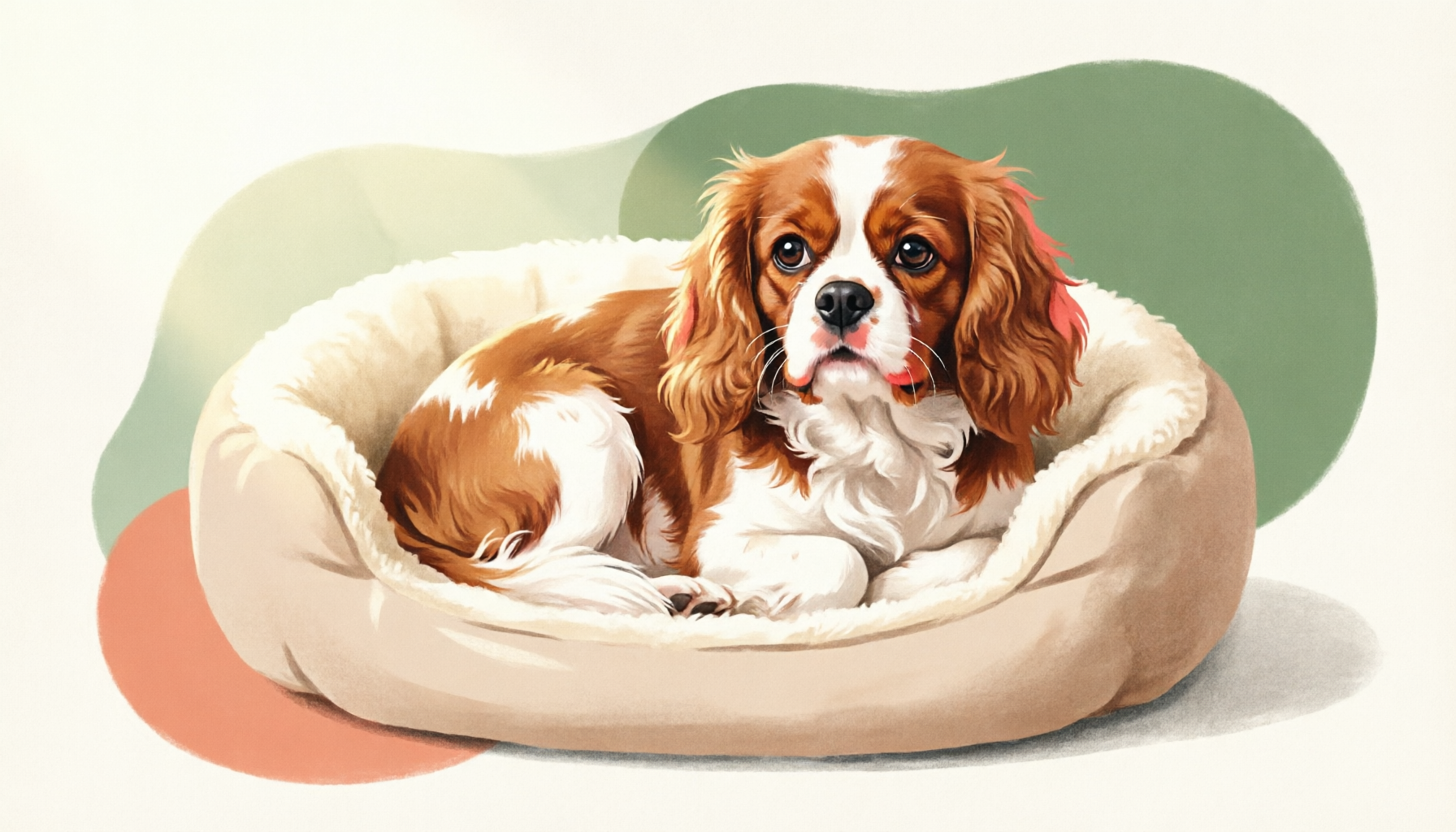
Quick answer: An anxiety bed can help — but only as part of a broader approach. The raised edges and fleecy fill of a quality calming bed provide genuine physical comfort for mildly anxious dogs. For moderate to severe anxiety (separation anxiety, storm phobia, noise sensitivity), you need behaviour modification training and sometimes veterinary input alongside any products.
What Does Anxiety in Dogs Actually Look Like?
Before considering what helps, it's important to recognise what anxiety looks like in dogs — because it's often subtle and easily misread.
Common signs of anxiety in dogs:
Physical signs:
- Pacing, particularly in circles or back and forth
- Drooling, panting (when not hot or exercised)
- Trembling or shaking
- Dilated pupils, whites of eyes visible
- Ears pinned back, tail tucked
- Yawning or lip-licking when not tired
Behavioural signs:
- Destructive behaviour when left alone
- Excessive barking or howling when alone
- House soiling despite being house trained
- Excessive licking or grooming (particular areas or themselves)
- Trying to hide or retreating to a specific place
- refusing to eat or settle when people leave
Normal vs. pathological: Some anxiety is a normal response to a genuinely stressful situation — a thunderstorm, a new environment, a recent change. What crosses into the territory of an anxiety disorder is when the response is disproportionate to the trigger, persists after the trigger is gone, or becomes a persistent pattern rather than an occasional reaction.
The Honest Truth About Anxiety Beds
Anxiety beds — also called calming, anti-anxiety, or donut beds — work on a principle that has legitimate scientific backing: the physical environment can reduce the physiological stress response.
What a good anxiety bed provides:
- Enclosure and raised edges that let a dog feel surrounded and protected
- Warmth that helps the body relax (physical warmth reduces the stress response)
- A soft surface that reduces pressure points and provides comfort
- A consistent, predictable sleeping space that the dog can learn to associate with calm
What it doesn't provide: A calming bed will not fix separation anxiety, noise phobias, or generalised anxiety disorders on its own. If your dog has moderate to severe anxiety, the bed is one tool in a toolkit that includes behaviour modification, management changes, and sometimes veterinary intervention.
Think of it this way: a calming bed is to anxiety what earplugs are to noise sensitivity — a helpful accommodation that reduces the stress trigger, not a treatment for the underlying condition.
When an Anxiety Bed Can Help
Mild situational anxiety: A dog who gets nervous during fireworks or storms may genuinely benefit from access to a calming bed. The enclosed, warm environment helps them feel safer and settle more quickly than they would on a flat mat or a cold floor.
New environment stress: A dog who is new to your home, or who has experienced a recent upheaval (moving house, new family member, loss of a companion) may find a calming bed a helpful part of settling in. The consistent, predictable comfort helps build a sense of safety.
General sensitivity: Some dogs are simply more sensitive by temperament — they startle at small noises, notice changes in their environment, and struggle to settle when things are unfamiliar. A calming bed gives them a known, safe space to retreat to.
Older dogs with cognitive decline: Senior dogs who are more anxious at night — a phenomenon sometimes called "sundowning" in dogs with canine cognitive dysfunction — can benefit from the warmth and enclosure of a calming bed as part of a broader management approach.
When You Need More Than a Bed
Separation anxiety: If your dog becomes highly distressed the moment you leave — destructive behaviour, excessive vocalisation, house soiling — a bed alone will not address this. Separation anxiety requires a structured behaviour modification programme, and in many cases veterinary support. Contact your vet first; they can refer you to a qualified behaviourist.
Noise phobias (fireworks, thunderstorms): Dogs with genuine noise phobia — not just mild nervousness — need a multi-pronged approach: a calming bed can be part of it, but desensitisation training (using recorded sounds at low volumes, gradually increasing over time) is the core treatment. Talk to your vet about a referral to a behaviourist.
Generalised anxiety disorder: A dog who is anxious in many situations — new people, new environments, changes to routine — has a pervasive anxiety condition that needs professional treatment. Do not rely on products to manage this; work with a qualified behaviourist and your vet.
What Makes a Good Anxiety Bed — Beyond the Hype
Not all anxiety beds are equal. Here's what to look for:
Fill depth and quality: The fill is the core of what makes an anxiety bed different. Deep microsphere fill (small beads that mould around the body) is better than hollow fibre for anxiety purposes — it provides more consistent physical contact and warmth. Press on the bed: good fill will spring back slowly, not immediately.
Wall height: The raised edges need to actually surround the dog, not just be decorative. For small dogs, 15–20 cm of wall height is useful. For larger dogs, 20–30 cm. A flat-edged bed with "anxiety" in the name is not an anxiety bed.
Breathable surface: The outer material should be soft and breathable — not a shiny synthetic that holds heat. Fleece, cotton, or a woven fabric is better than polyester.
Non-slip base: An anxious dog may get in and out of the bed quickly when startled. A non-slip base prevents the bed from sliding, which can startle them further.
Machine washable: An anxious dog may drool, shed heavily, or have stress-related house soiling. Fully washable covers and inner fill are essential.
The Role of Pressure and Touch
There's a specific technique used by behaviourists and vets for anxious dogs: applying steady, gentle pressure around the torso. This is the principle behind anxiety wraps like the Thundershirt, and it extends to bed design.
Deep pressure simulation: A bed with dense, heavy fill that applies gentle pressure to the dog's body when they lie against it mimics the effect of a pressure wrap. This is why very soft, flat beds don't have the same calming effect as deep-fill raised-edge designs — the physical sensation of being gently contained is part of what helps.
Temperature and calm: Physical warmth helps reduce the stress response — this is well-documented. The warmth of a dog's own body reflected back by a fleecy surface, combined with the heat retention of deep fill, creates a physically calming environment. This is why self-warming beds (with a reflective layer) are also effective.
What About Anxiety Wraps and Vests?
Thundershirts and similar anxiety wraps work on the same pressure principle as a deep-fill anxiety bed. For mild situational anxiety, many owners report significant improvement with a properly fitted anxiety wrap.
When to use a wrap:
- During known triggers (thunderstorm season, fireworks, building work)
- During stressful events (travel, vet visits, house guests)
- For acute situational anxiety rather than ongoing general anxiety
Important limitations: An anxiety wrap is not a long-term treatment for separation anxiety or pervasive anxiety. It's a management tool for specific situations, used alongside behaviour modification.
Fit matters: An anxiety wrap needs to be snug — gentle, steady pressure across the torso, not tight enough to restrict breathing or movement. Follow the manufacturer's sizing guide carefully.
Environmental Changes That Help Anxious Dogs
Beyond beds and wraps, the physical environment makes a real difference.
Create a safe space: Every anxious dog benefits from a predictable, consistent safe space — a place they can go when stressed that is always the same. This doesn't need to be a crate; a corner with a bed and a blanket over the top works too. The key is that the space is always available, always the same, and associated only with calm.
Reduce visual triggers: For dogs anxious about things outside (people passing, other animals), blocking the visual access helps. A bed positioned away from windows, or curtains that block the view, reduces the anxiety trigger.
Sound management: For noise-sensitive dogs, white noise or a radio at low volume during storms/fireworks can help mask the sound. Sound masking is different from desensitisation — it's just reducing the intensity of the trigger, not training the dog to accept it.
Consistent routine: Anxious dogs are often less anxious when their environment and routine are predictable. Consistent feeding times, walk times, and sleep locations help.
When to See Your Vet
If your dog shows signs of moderate to severe anxiety — persistent pacing, destruction when alone, house soiling, aggression related to fear — book a vet appointment. Your vet can:
- Rule out medical causes (pain can cause anxiety-like behaviour)
- Prescribe calming medication for acute situations or as part of a treatment plan
- Refer you to a qualified clinical animal behaviourist (the only professional qualified to treat clinical anxiety disorders in dogs)
In the UK, look for a behaviourist accredited by the Association of Pet BehaviourCounsellors (APBC) or the Royal Veterinary College. Avoid "behaviourists" without recognised qualifications.
Frequently Asked Questions
Can a calming bed cure my dog's anxiety?
No — no product can cure anxiety. A calming bed can help manage mild situational anxiety and provide comfort as part of a broader approach. For moderate to severe anxiety, you need behaviour modification training and possibly veterinary medication.
My dog ignores their calming bed — is it broken?
Probably not. An anxious dog may take weeks to accept a new bed as part of their safe space. Try putting a worn T-shirt (your scent) inside the bed, or placing it in a corner they already like. Don't force them — make the bed attractive without pressure. If the bed has been used and then abandoned, check whether the fill has compressed (making it uncomfortable) or whether the dog has developed a negative association (a stressful event happened while they were in it).
Does the price of an anxiety bed matter?
Generally, yes — a very cheap anxiety bed will have thin, flat walls and hollow fibre fill that compresses quickly. The physical properties that make an anxiety bed effective (deep fill, raised edges, warmth) cost more to produce. A bed under £30 is unlikely to have the fill depth and quality needed to be effective for an anxious dog.
Should I use a crate with a calming bed for an anxious dog?
Crates can work well for anxious dogs as long as the dog has been positively introduced to the crate (not forced in) and it is not used as punishment. The crate becomes another safe space. Place the calming bed inside the crate and leave the door open — the crate is available, not a prison.
My dog is anxious during fireworks — what's the best approach?
A combination: get a calming bed or anxiety wrap, play white noise or calming music during the event, keep curtains closed, stay calm yourself (dogs read human anxiety), and consider speaking to your vet about a short-term calming medication if the dog is severely affected. Long-term: a desensitisation programme with recorded sounds, run by a qualified behaviourist.
Can I use a calming bed alongside behaviour training?
Yes — and this is exactly the right approach. The bed provides physical comfort and environmental support, while the training addresses the underlying behavioural issue. They work together: a dog who is calmer physically is more able to learn during training sessions.
Visa&Momo's calming dog beds → are designed with the raised-edge, deep-fill construction that provides genuine physical comfort for anxious dogs — one part of a broader approach to helping your dog feel safe.
Dog Bed Guide UK Anxiety Dog Bed Options Calming Dog Beds UK